AgentMax field notes
AI Agents in Customer Service: The Numbers That Actually Matter
Most stats about AI agents in customer service get thrown around without context. Here's what the numbers actually mean for a business deciding whether to automate.
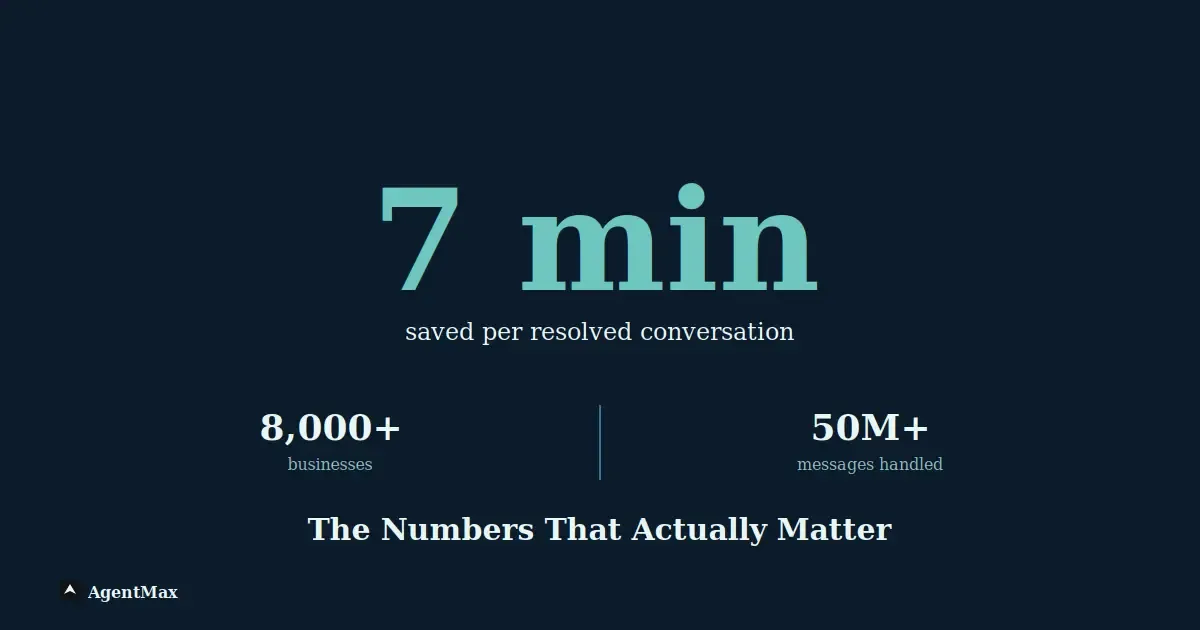
Every article about AI agents in customer service throws around the same handful of statistics, usually stripped of any context that would make them actually useful. A number like "saves 7 minutes per ticket" means very little on its own. It means a lot once you know what that adds up to across a real support volume.
Quick Answer
The most useful statistics on AI agents in customer service aren't the flashy headline numbers, they're the ones that translate directly into hours saved, coverage gained, and revenue protected for a specific business size. Context turns a stat into a decision-making tool.
The time-saved number, with actual context
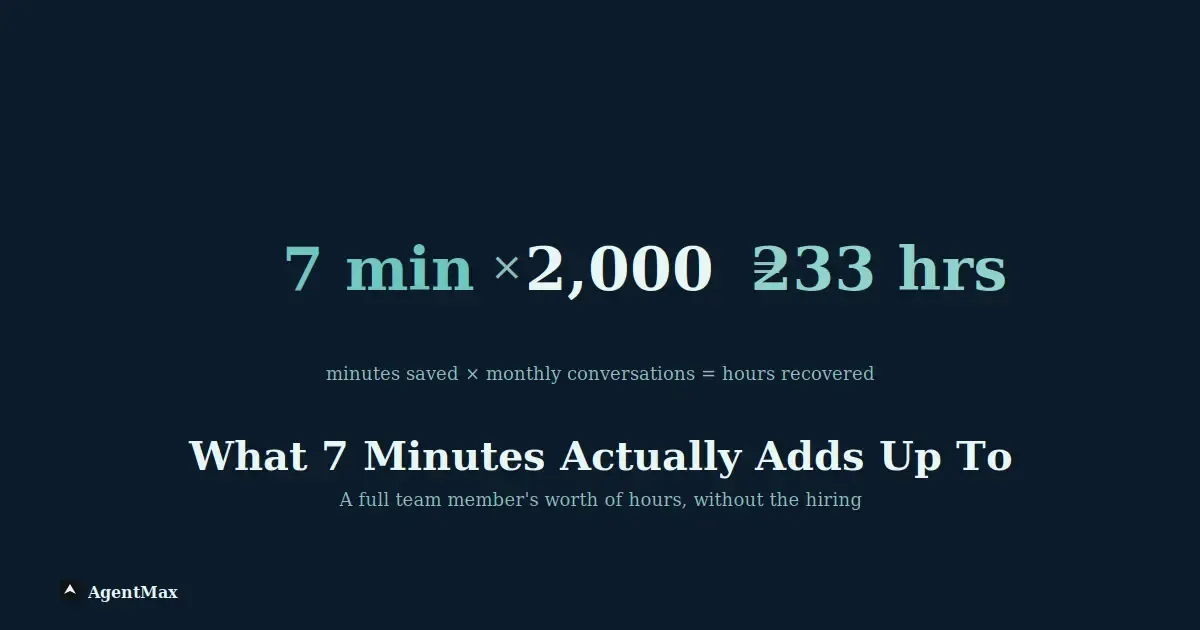
On AgentMax, businesses running a support agent save close to 7 minutes of manual work per resolved conversation, on average. Taken alone, that's an easy number to shrug off. Multiplied across real volume, it stops looking small.
What 7 minutes actually adds up to
A business handling 2,000 support conversations a month, a realistic number for a mid-sized ecommerce store or service business, saves roughly 233 hours a month once an agent is resolving a meaningful share of those conversations without a human stepping in. That's the equivalent of adding a full-time team member's worth of hours back, without the hiring.
The coverage number: what "24/7" actually changes
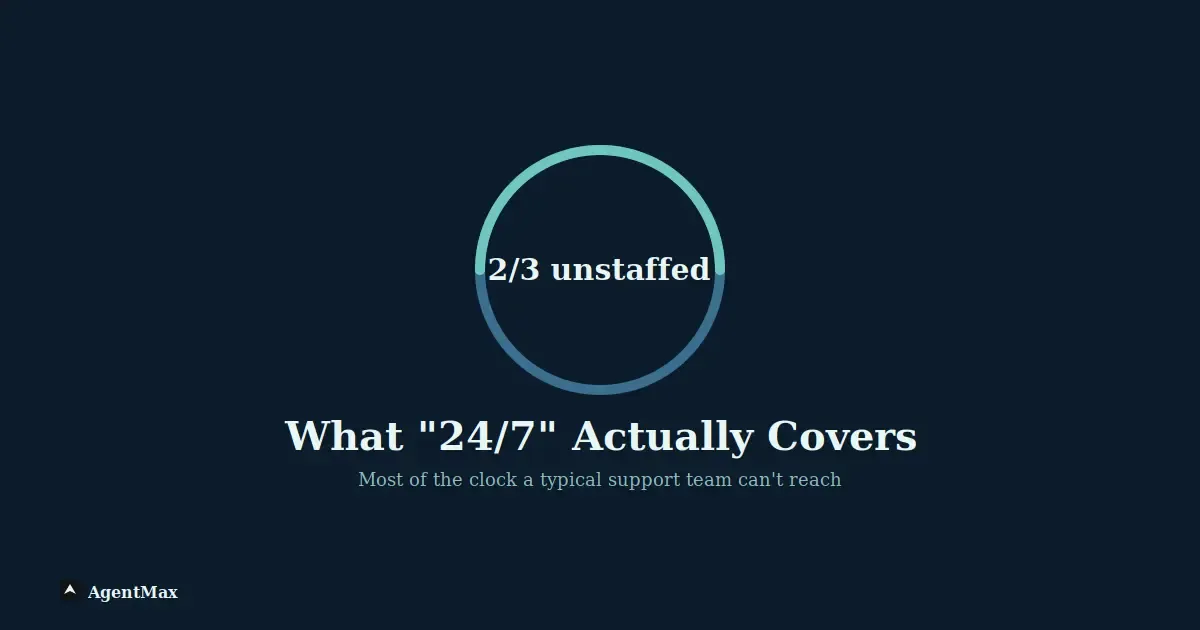
"24/7 availability" gets used so often it stops meaning anything specific. What it actually changes is which hours a business can respond to a customer at all. A support team working standard hours is unavailable roughly two-thirds of the day, nights, early mornings, weekends. An agent covering those hours, whether it's answering support questions or taking orders through WhatsApp, isn't adding a small convenience, it's covering the majority of the clock that would otherwise go unanswered.
Why this hits harder than it sounds
More than 8,000 businesses currently run agents on AgentMax, processing over 50 million messages, and a significant share of that volume happens specifically in the hours a typical support team isn't staffed. The coverage gap isn't a minor edge case, it's most of the day for a lot of businesses.
The resolution-without-escalation number
The statistic that matters most for judging whether an agent is actually working isn't how many conversations it touches, it's how many it resolves without needing a person. A high number here means real workload is being absorbed. A low number, even with high conversation volume, usually means the agent is answering easy questions while everything meaningful still lands on your team anyway.
This is the number most vendors don't lead with, because it varies enormously by how well an agent is set up rather than by the platform alone. A well-configured knowledge base moves this number more than almost anything else.
The escalation-quality number nobody measures
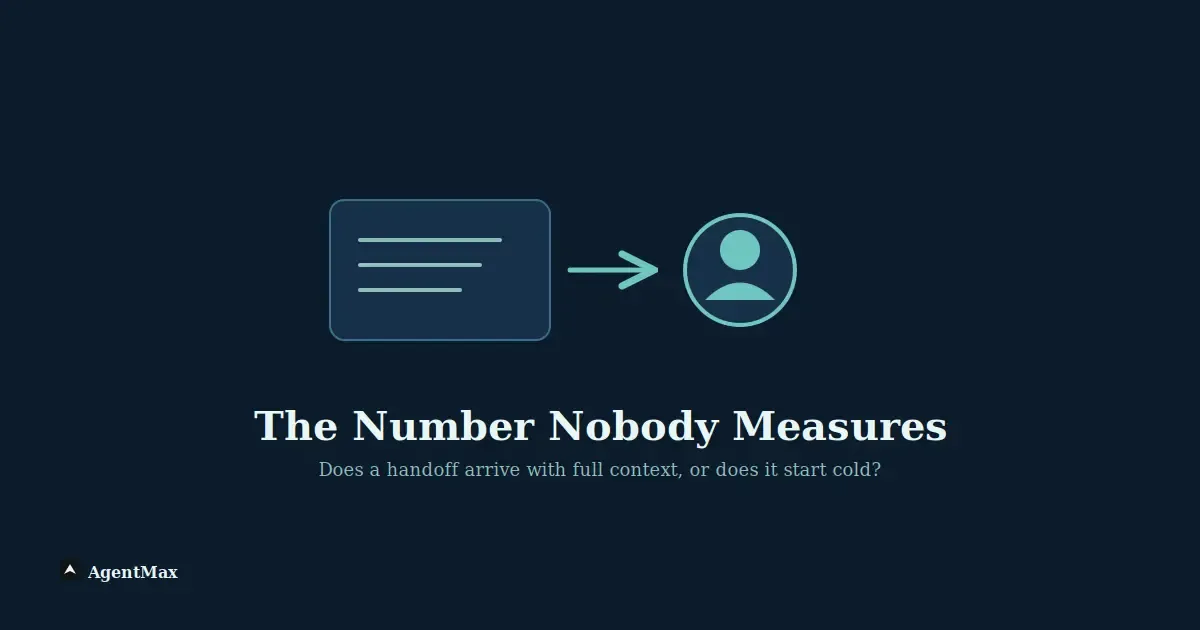
Almost no public statistic covers this, but it matters as much as any of the numbers above: when a conversation does get escalated, does it arrive with full context, or does a customer have to repeat themselves? This isn't something you'll find in a stats roundup, but it's worth asking about directly, since a bad handoff can undo most of the goodwill an agent built up in the conversation.
Putting these numbers together for your own business
A rough way to estimate impact for a specific business: take your monthly conversation volume, multiply by the average minutes saved per resolved conversation, and that's your baseline time recovered. Then look at what share of your current volume happens outside business hours, since that's where coverage numbers matter most directly. Together, these two calculations usually tell you more than any generic industry statistic could, and the pricing page can help translate that into what plan actually fits your volume.
A few questions people usually ask
Are these statistics typical across the industry, or specific to one platform?
Time-saved and coverage figures vary by platform and by how well an agent is configured; the numbers here reflect AgentMax's own data, and are a reasonable starting point for estimating impact elsewhere.
Why don't more platforms publish escalation-quality data?
It's harder to measure consistently than volume or response time, and it depends heavily on setup quality, so it gets left out of most public statistics even though it matters just as much.
How quickly do these numbers typically show up after setup?
Time and coverage gains usually show up within the first couple of weeks. Resolution-without-escalation rates tend to improve gradually as the knowledge base gets refined.
Is a high resolution rate always a good sign?
Not always. A very high rate can sometimes mean the agent is confidently answering things it shouldn't, so it's worth checking escalation quality alongside resolution rate rather than looking at either number alone.
Ready to see these numbers against your own conversation volume? Start a free trial and get a real read on what an agent would save your team. No card required.